Remodel or Move? How to Weigh a New Home Against the One You Have
If the location still fits and the problem is space or layout, remodeling is usually the simpler path. If the location no longer fits, no remodel will fix that, and the real choice becomes buying an existing home or building a new one. The house you’re in, the mortgage you have, and how long you plan to stay all belong in the math.
There are really three options here, not two: remodel the home you have, buy another existing home, or build new. This guide walks through how to weigh them. It’s part of our series on remodeling vs. new construction.
Start With the Location, Not the House
The location is the one thing a contractor can’t change. So ask about it first.
- Is the commute still right?
- Do the schools, church, and family nearby still fit your life?
- Do you have the land you want, or do you want more of it?
- Are you planning to stay 10 years or more?
If you’d stay in this spot happily with a better house, lean toward remodeling. If the spot itself is the problem, a remodel only makes a nicer house in the wrong place.
What Moving Really Costs
Moving costs more than the price difference between two houses. Count:
- Selling costs on the house you have: commissions, closing costs, repairs the buyer asks for
- Buying costs on the next one: closing costs, inspections, appraisal
- The move itself
- The work the next house will need. An existing home comes with its own list.
- Your mortgage rate
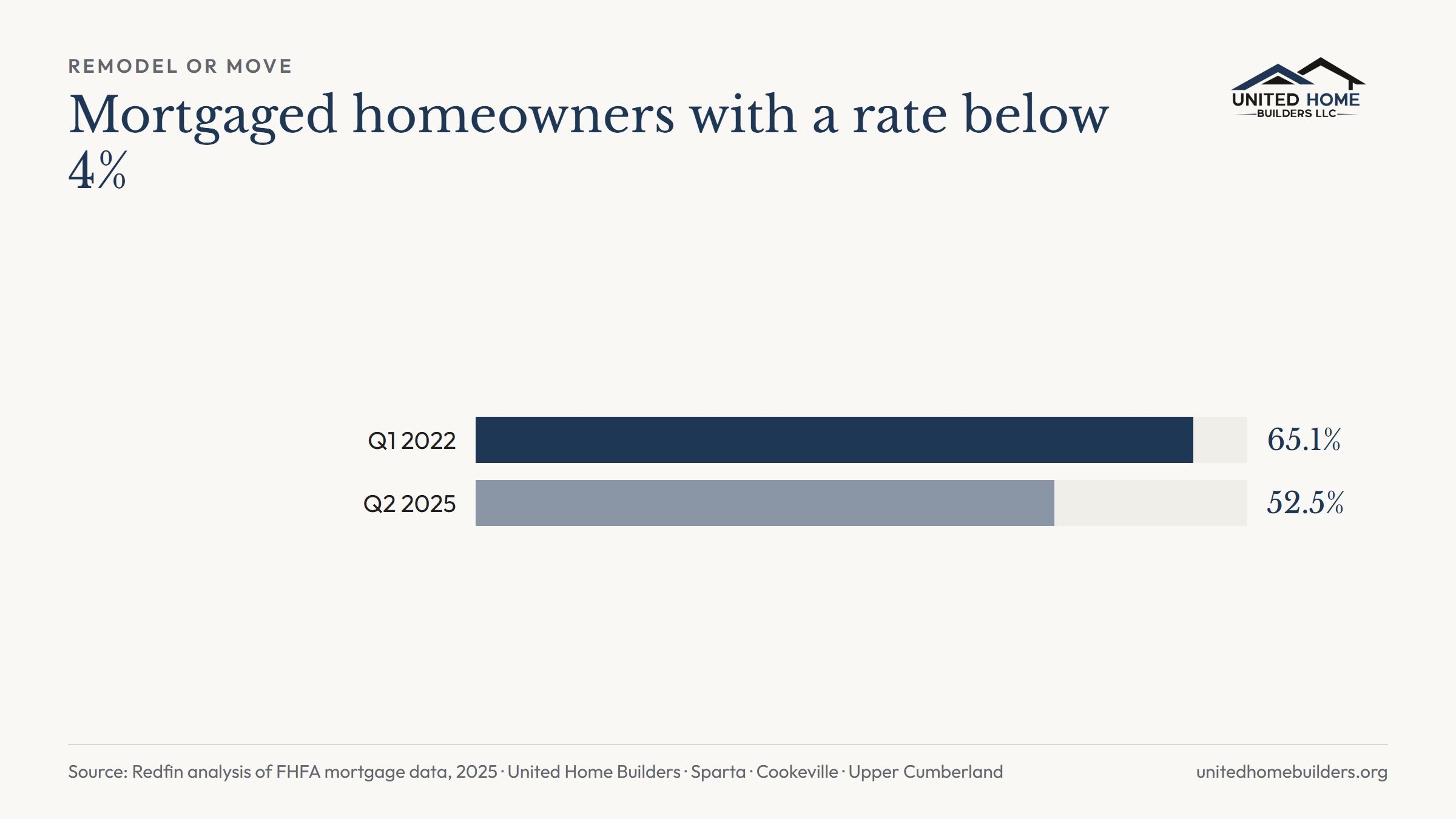
That last one has changed the decision for a lot of families. Redfin’s analysis of federal mortgage data found that 52.5% of mortgaged homeowners had a rate below 4% in mid-2025, down from 65.1% in early 2022. If you’re one of them, moving can mean trading a low rate for a higher one on a bigger balance.
That isn’t a reason to stay forever. Redfin’s head of economics research, Chen Zhao, said in the same report that “more homeowners are deciding it’s worth moving even if it means giving up a lower mortgage rate.” Life changes, and sometimes the house has to change with it. Just put the rate in the math before you decide.
What Staying and Remodeling Really Costs
Remodeling has its own costs, and they aren’t all in dollars:
- Disruption. Dust, noise, crews in the driveway, and maybe weeks without a kitchen.
- The limits of the house. The footprint, the lot, and the existing structure set what’s possible.
- A ceiling on value. A big addition on a modest street may not show up fully in the sale price. In the 2025 Cost vs Value report, a midrange bathroom addition returned about 53% of its cost at resale nationally.
- Surprises in older houses. Our cost guide covers what to set aside for them.
On the other side of the ledger, people are usually glad they stayed. In the 2025 Remodeling Impact Report, 64% of homeowners said they wanted to spend more time at home after their project was finished.
If You Move, Buy Existing or Build New?
Once you’ve decided to move, there’s a second fork.
Buying an existing home is faster. You can see exactly what you’re getting, and you can be in within weeks of closing. But you inherit an older house. The median American home was 44 years old in 2023, according to Harvard’s Joint Center for Housing Studies, so many buyers end up remodeling anyway.
Building new takes longer. Homes built by hired contractors took about 12 months from permit to completion in 2024, per NAHB’s analysis of Census data. In exchange, you choose the land, the layout, and every system in the house. In the Upper Cumberland, that often means building on acreage with room for a shop or a barndominium. See our new construction page for what that involves.
If you’re relocating to the area, our guide to moving to Cookeville, TN covers the towns, the land, and the buy-or-build question in more detail.
A Quick Way to Score Your Options
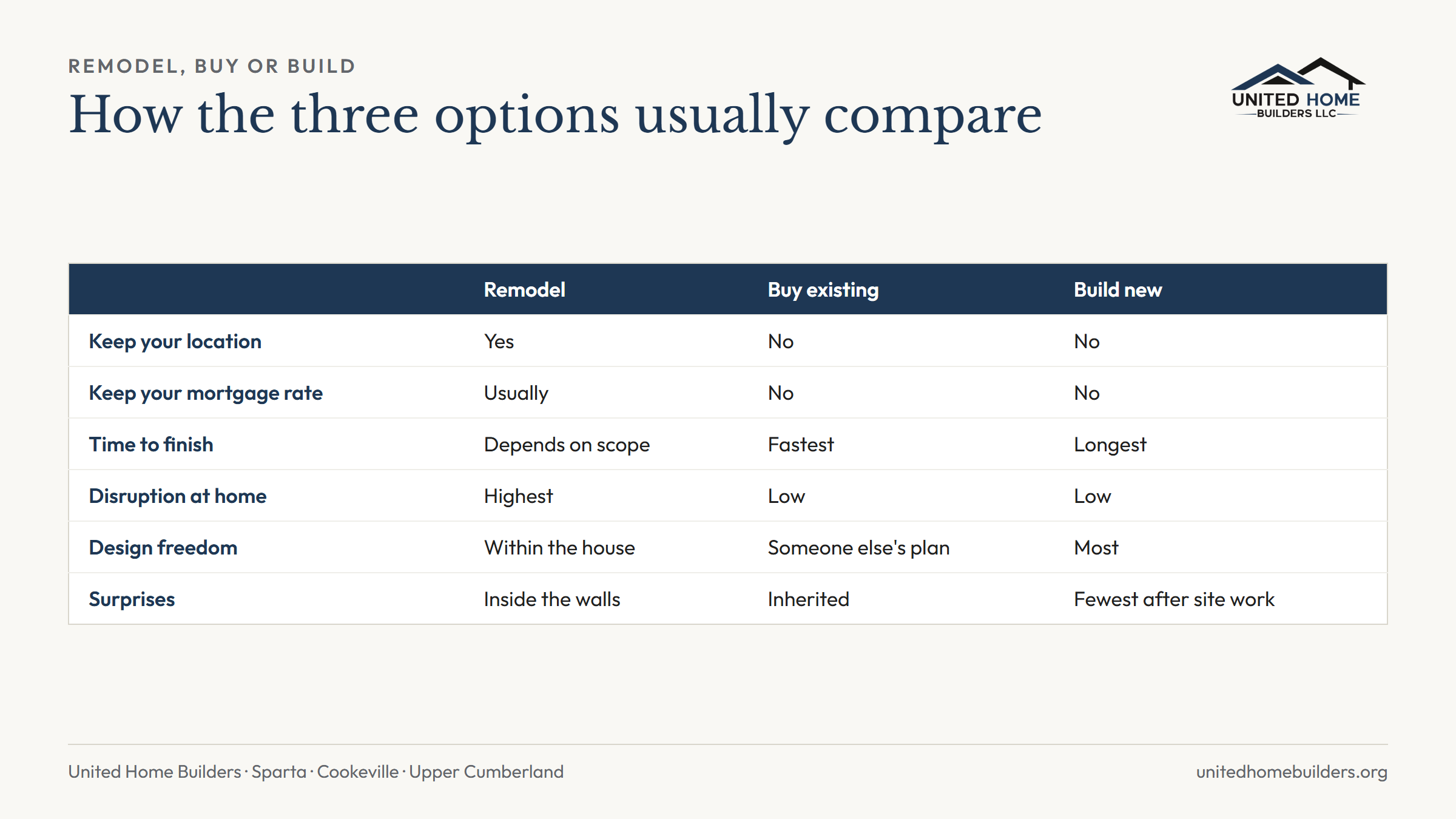
Score each option against what matters most to you. Here’s how the three usually compare:
- Keeping your location: remodeling wins outright.
- Keeping your mortgage rate: remodeling, unless you’d pay for it with a new loan.
- Speed: buying is fastest. A remodel depends on scope. Building takes the longest.
- Disruption: buying and building keep the work away from where you live. A remodel brings it home.
- Design freedom: building wins. A remodel works within the house you have, and a purchase is someone else’s plan.
- Surprises: a new build has the fewest once the site work is done.
None of those rows decides it alone. Rank the two or three that matter most to your family, and let those pick.
Talk It Through Before You List the House
Before you call a realtor, it’s worth finding out what a remodel would really involve. Our Discover → Plan → Build process starts with a conversation about what you need and what the house and land can handle. Mike Dalton brings 35 years of leadership and project management, and Rick Conley brings 32 years in construction.
We do both remodeling and additions and new homes across Sparta, Cookeville, and the Upper Cumberland, so either answer is one we can help with. If the house needs more than a remodel, read Tear Down and Rebuild or Renovate? next. When you’re ready, start with a conversation and pick Other / Not Sure Yet on the form.