Is It Cheaper to Build or Remodel a House?
Remodeling is usually cheaper in total dollars, because you’re changing part of a house instead of building all of one. Per square foot, it’s a different story. Remodels and additions often cost as much as new construction or more, because they carry demolition, tie-ins to the existing house, and whatever turns up inside the walls. A remodel that touches most of the house can approach the cost of building new.
So the honest answer depends on how much of the house you’re changing. This guide is part of our series on remodeling vs. new construction. It walks through where the money goes on each side, the costs people forget to count, and how to compare real numbers for your own house.
Why Remodeling Usually Costs Less in Total
A remodel keeps most of what’s already built and paid for. The foundation, the roof structure, the exterior walls, the driveway, the utility connections, and the land all stay. You pay only for what changes.
That’s why a kitchen remodel or a bedroom addition costs a fraction of a new house. It’s also why remodeling can be phased. You can do the most important room now and the next one when the budget allows.
National spending reflects how many homeowners make that choice. Harvard’s Joint Center for Housing Studies expects annual homeowner spending on improvements to reach about $518 billion by the end of 2026.
Why Remodeling Can Cost More per Square Foot
Square foot for square foot, new construction is often the more efficient way to build. A remodel adds work that a new build never has:
- Demolition and haul-off of what’s coming out.
- Protecting the rest of the house while you live in it.
- Tie-ins. Matching a new roofline to an old one, extending old wiring and plumbing, and making new brick or siding match.
- Surprises. Rot, outdated wiring, undersized framing, or a past repair that wasn’t done right. You budget a contingency because you can’t see inside the walls until they’re open.
- Upgrades the project triggers. An addition may need a bigger electrical panel, more HVAC capacity, or more septic capacity than the house has now.
The 2025 Cost vs Value report shows how this plays out. A midrange bathroom addition averaged $60,645 nationally. A midrange minor kitchen remodel averaged $28,458. Those are national averages, not quotes, and prices in the Upper Cumberland will differ. But they show how quickly the per-square-foot cost of an addition adds up.
What Building New Costs Beyond the House Itself
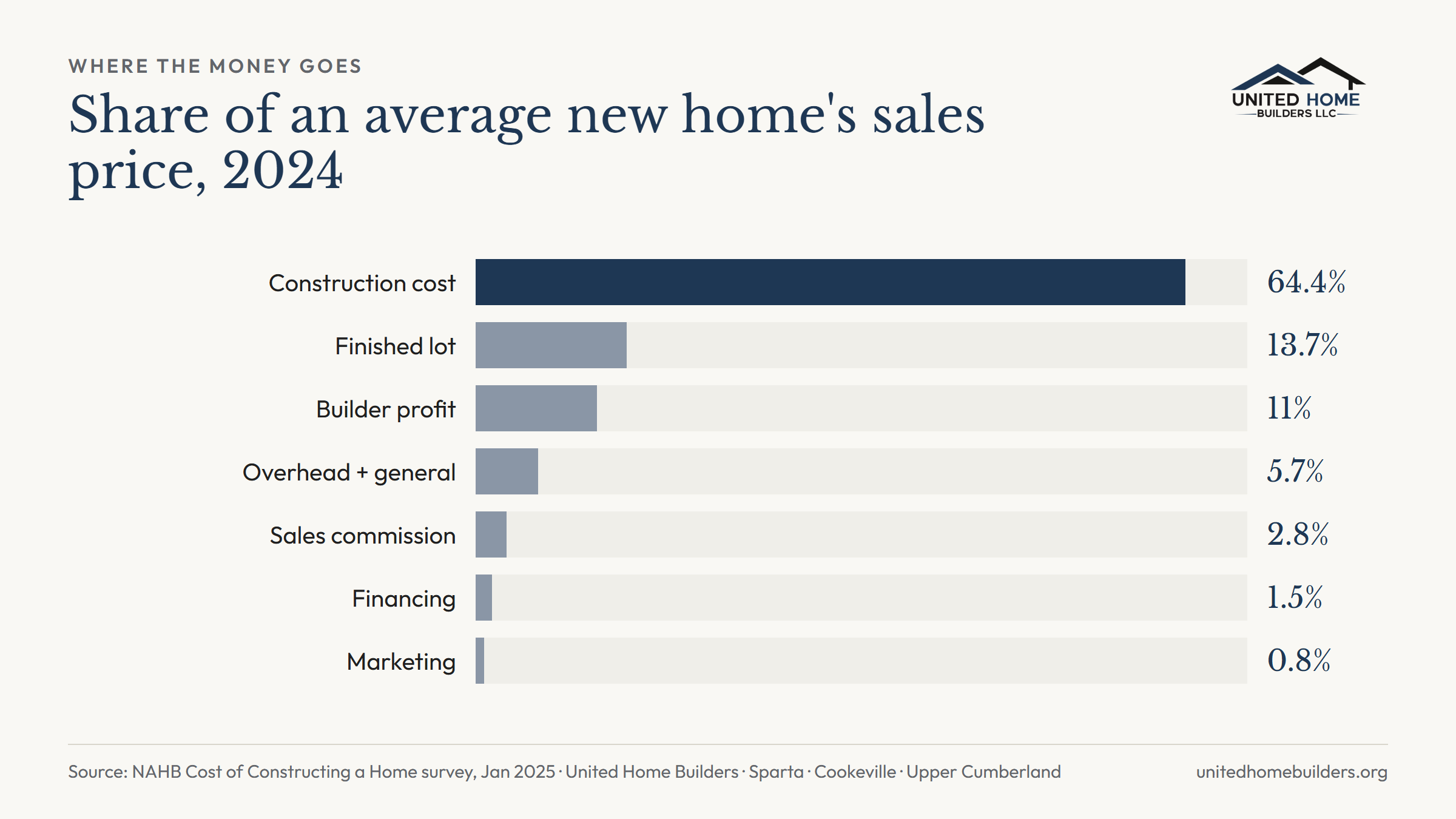
The National Association of Home Builders surveys builders on where the price of a new home goes. In its 2024 survey, construction costs made up 64.4% of the average sales price, a record share. The finished lot made up 13.7%.
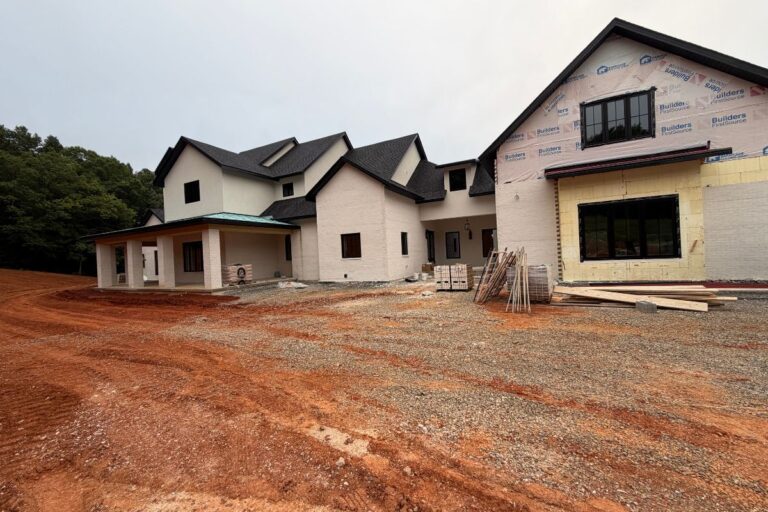
That breakdown is for homes builders build and sell with the lot included. A custom home on land you already own works differently. You’ve already paid for the land, but you still pay to get it ready to build on:
- Clearing and grading
- A driveway, which can be long on rural land
- Power, and a water tap or a well
- A septic system where there’s no sewer, which in Tennessee needs a state permit after a site evaluation
- Foundation work that depends on slope and rock
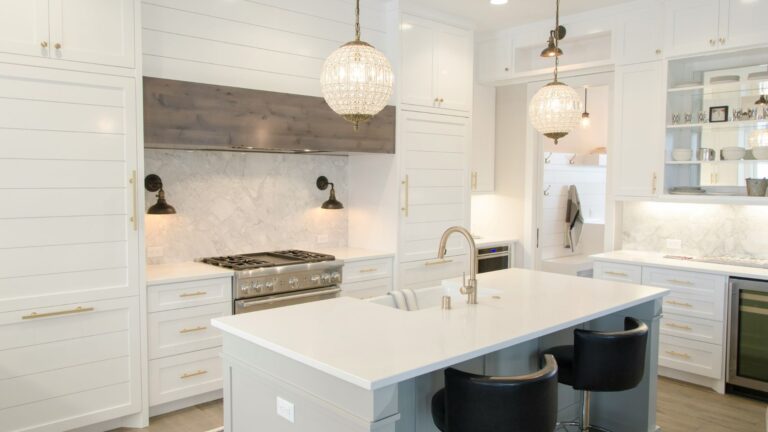
Inside the house, finishes drive the budget. In the same NAHB survey, interior finishes were the largest single stage of construction cost at 24.1%. The cabinets, counters, flooring, and fixtures you choose move the number on a new build just as much as on a remodel.
The Costs People Forget on Each Side
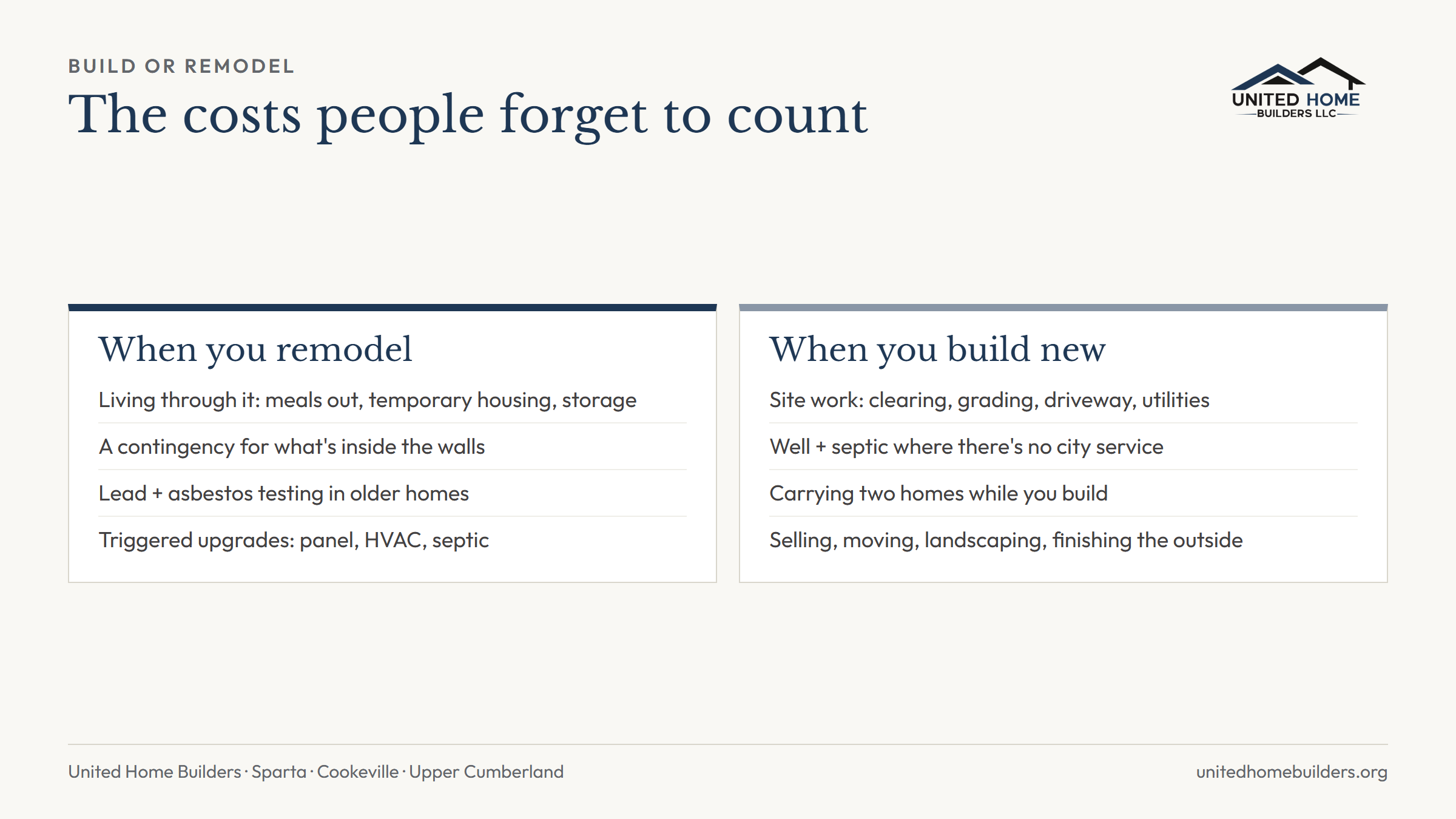
Most bad decisions here come from comparing a remodel contract to a new-build contract and stopping there.
When you remodel, also count:
- Living through it: eating out, temporary housing for a big kitchen or bath project, and storage
- A contingency for what’s inside the walls
- Testing older materials. If your home was built before 1978, the EPA requires lead-safe work practices from anyone paid to disturb painted surfaces. The EPA also recommends an asbestos inspection before remodeling when older materials will be disturbed.
- Upgrades the project triggers: the panel, the HVAC, the septic
When you build new, also count:
- Site work, as listed above
- Carrying costs while you build, such as construction loan interest and paying for the house you live in now
- Selling your current home and moving, if you’re not keeping it
- Finishing the outside: landscaping, gutters and drainage, a patio or porch
- The small things that come with any new house: window coverings, appliances, mailbox, outbuildings
How to Compare Real Numbers for Your House
Averages won’t decide this for you. A real comparison takes a look at your house, your land, and your list.
- Write down what you need, not what you’d like. More bedrooms, a main-floor primary suite, a bigger kitchen, a shop. Keep it short.
- Get the existing house assessed. Foundation, framing, roof, and the major systems. That tells you how big the remodel really is.
- Price both paths at the same level of finish. A builder-grade new house compared to a high-end remodel isn’t a real comparison.
- Add the forgotten costs from the lists above.
- Decide what you’re optimizing for. Lowest cost, fastest finish, least disruption, or the house you’ll want in 20 years. They don’t always point the same way.
Resale isn’t the only measure. In the 2025 Remodeling Impact Report, NAR deputy chief economist Jessica Lautz pointed to “the disparity between the joy experienced post-remodel and the actual cost recovery.” A project can be worth doing even when it doesn’t pay back dollar for dollar.
Our preconstruction services exist for this step: a consultation, a preliminary estimate, and a budget built on your house and your land before you commit to anything. Because we do both remodeling and additions and new construction, we can lay the two paths side by side.
Still weighing the bigger question? Read Tear Down and Rebuild or Renovate? or Remodel or Move?. When you’re ready, start with a conversation and choose Other / Not Sure Yet on the form.