MOVING TO TENNESSEE
Moving to Tennessee? Let’s Make It Feel Like Home.
Your Next Chapter Starts in the Upper Cumberland.
Rolling hills, a slower pace, and room to spread out. Whatever is drawing you to Tennessee, United Home Builders helps families settle into Sparta, Cookeville, and the surrounding Upper Cumberland by building homes that fit the land and the life they came here for. Whether you already own property or you’re just starting to look, this guide walks you through what comes first.
A Move in Three Stages.
Most of the families we talk to are somewhere on the same path. Knowing where you are on it tells you what to do next.
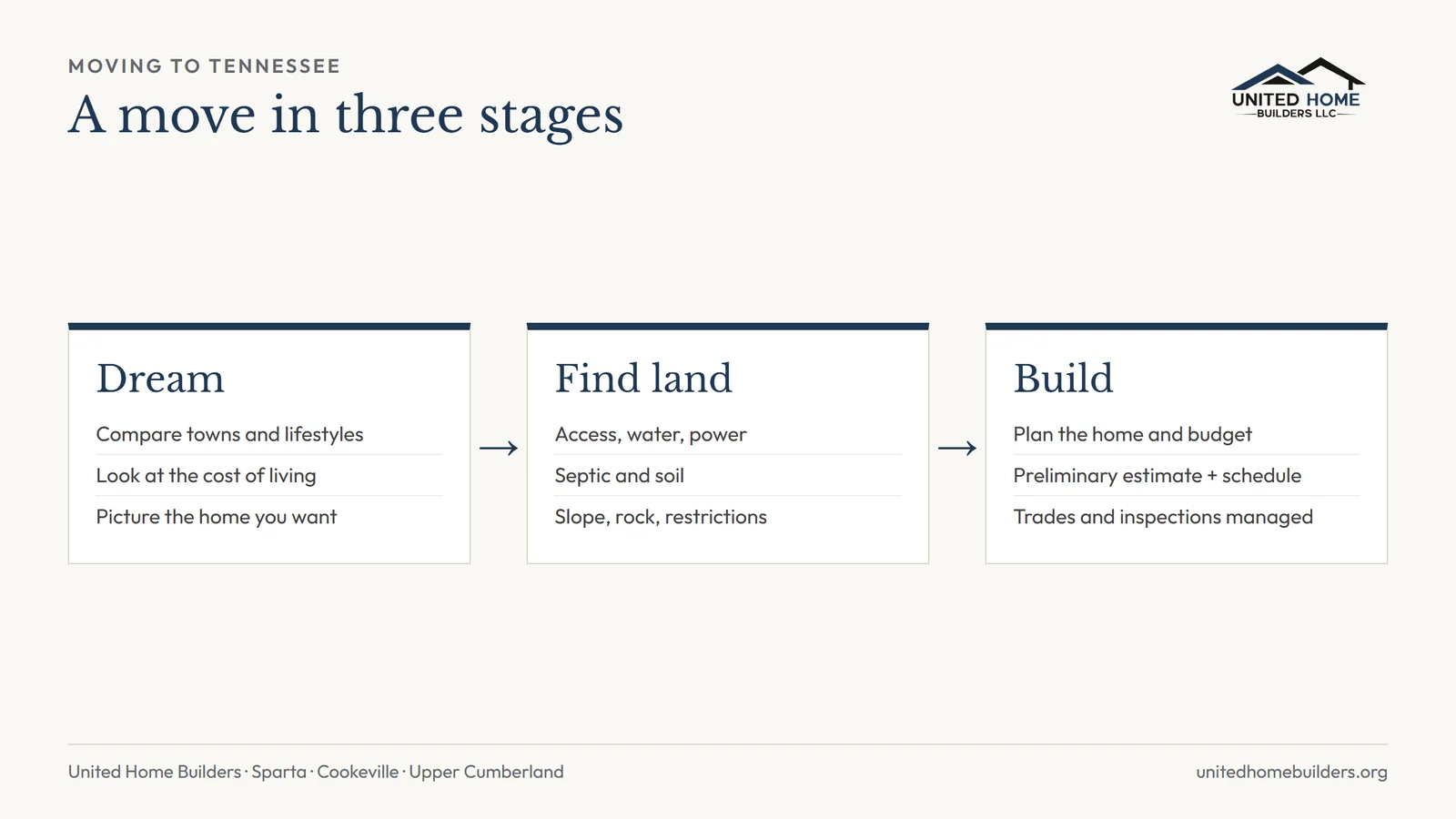
- Dreaming about Tennessee. You’re comparing towns, lifestyles, and the cost of living.
- Finding the right property. You’re looking at land and learning what it takes to build on it.
- Building your Tennessee home. You’re ready to plan the house, the budget, and the schedule.
Each section below follows that order, so start wherever you are.
Why So Many People Are Choosing Tennessee.
For some it’s the scenery. For others it’s the chance to own land, build a home that fits how they live, and put down roots in a town where people still know their neighbors.
Waterfalls, Lakes, and Room Outside
The Upper Cumberland sits between the Highland Rim and the Cumberland Plateau, and the outdoors is part of everyday life here. Burgess Falls and Rock Island are a short drive from Sparta and Cookeville, Cummins Falls is just north of Cookeville, and Fall Creek Falls is one of the best-known state parks in Tennessee.
Room to Build the Life You Want
Depending on the town and the property, you may find room for acreage, a garden, a shop, a covered porch that faces the view, and more space between you and the next house.
Small Towns With Real Character
Locally owned businesses, county fairs, farmers markets, and downtowns where you’ll run into someone you know. The region keeps a strong sense of identity even as it grows.
Taxes: What’s True and What to Check
Tennessee doesn’t tax wages. The state’s last income tax, the Hall tax on interest and dividends, was fully repealed beginning January 1, 2021. Property and sales taxes still apply, and property taxes vary by county and city. The Tennessee Comptroller explains how to calculate a property tax bill: residential property is assessed at 25% of its appraised value, then multiplied by the local tax rate. Compare the county you’re considering before you assume it costs less than where you live now.
A Fit for Retirement, Family, or a Fresh Start
Whether you’re moving to retire, to be near family, for the outdoors, or for a fresh start, the region offers a range of places to settle.
Discover the Upper Cumberland: Where Could You Call Home?
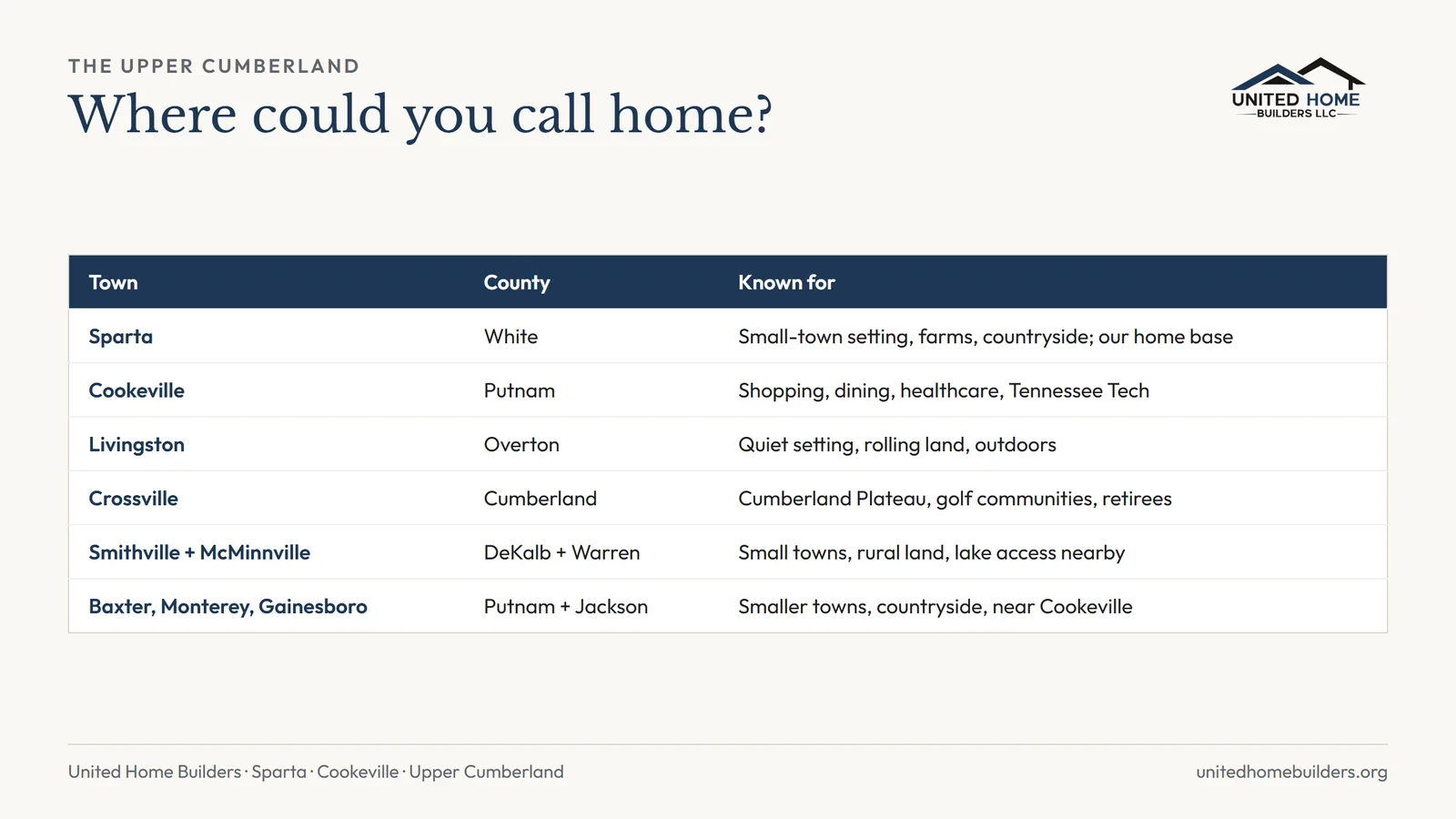
Not sure which town is right for you? The Upper Cumberland is a collection of communities with different landscapes, amenities, and pace.
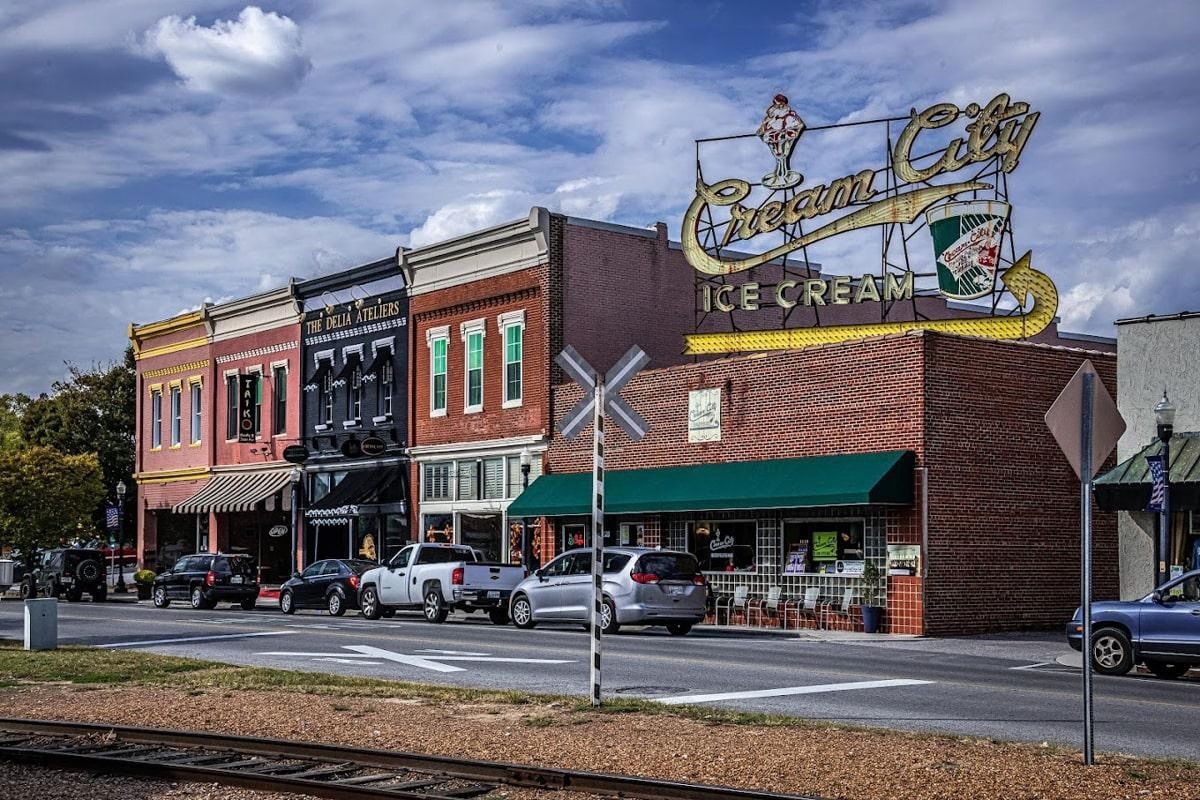
Sparta
The county seat of White County and our home base. Sparta offers a small-town setting surrounded by farms, countryside, and outdoor recreation. It’s a good place to look if you want a home with some breathing room.
Cookeville
Cookeville blends small-town character with everyday conveniences: shopping, dining, healthcare, and Tennessee Tech University. It works well if you want more amenities close by while staying near the countryside. Our guide to moving to Cookeville, TN goes deeper.
Livingston
Livingston and Overton County offer a quieter setting, rolling land, and easy access to the outdoors. It’s worth a look if country living is the goal.
Crossville
Up on the Cumberland Plateau, Crossville is known for outdoor recreation, golf communities, and its appeal to retirees.
Smithville, McMinnville, and Gainesboro
Each offers its own mix of small-town living and rural land, with lake and river access nearby.
Baxter, Monterey, and Surrounding Communities
Smaller towns and countryside properties with quick access to Cookeville.
We build across Sparta, Cookeville, Crossville, Livingston, Monterey, Smithville, McMinnville, Gainesboro, and the surrounding area. If you have a specific location in mind, ask us and we’ll confirm it’s in our service area.
Don’t Have Land Yet? Start Here.
One of the first questions we hear from people moving to Tennessee is, “Where do we even begin?” If you haven’t bought property yet, that’s okay. In fact, it’s the best time to talk with a builder.
A beautiful view or a great listing price doesn’t tell you whether the land will work for the home you have in mind. Before you commit, it helps to know what it will take to build there.
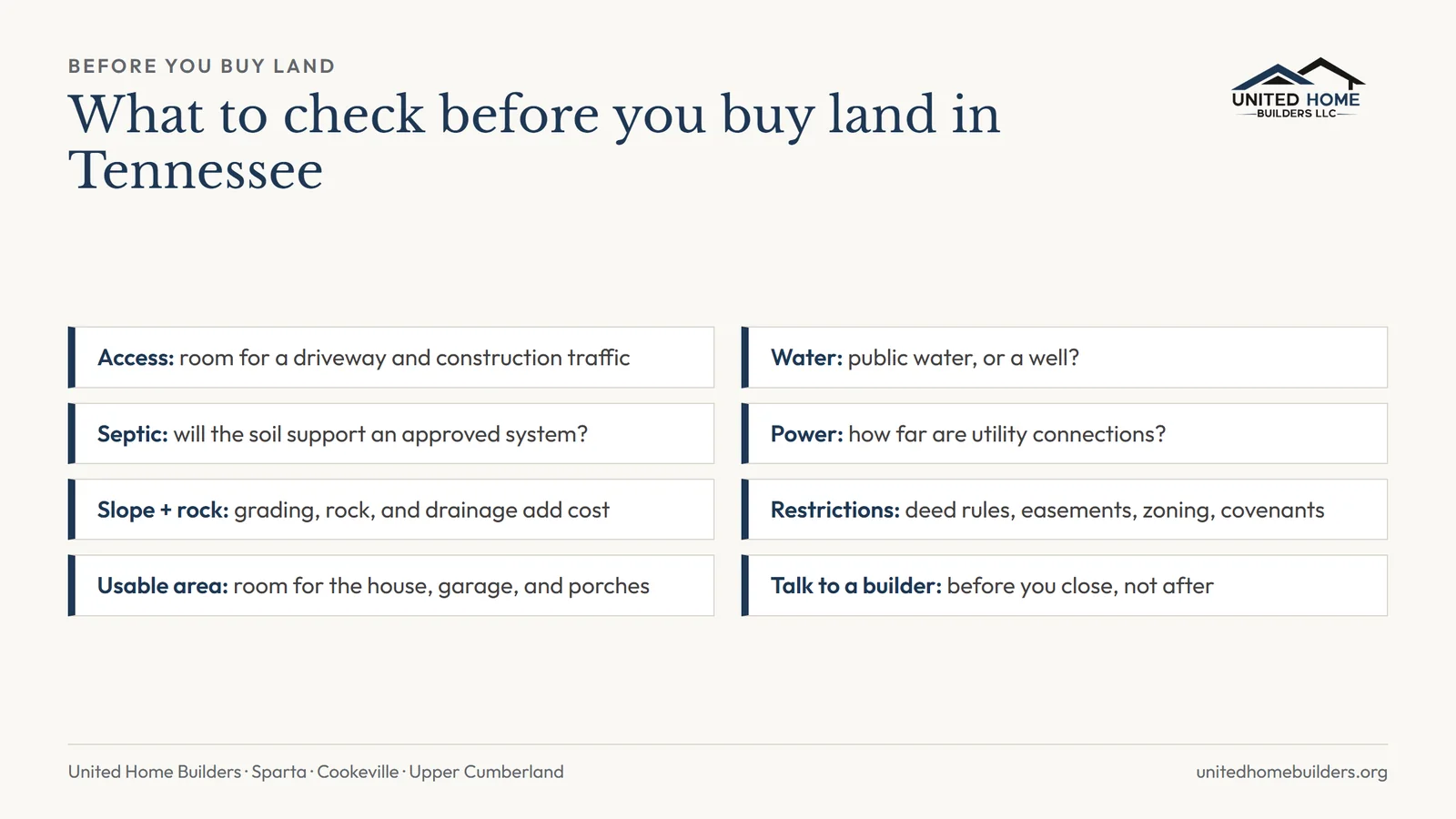
What to Check Before You Buy Land in Tennessee
- Access and driveway: Can the property handle a driveway and construction traffic?
- Water: Is public water available, or will you need a well?
- Septic: If there’s no public sewer, will the soil support an approved septic system?
- Power and utilities: How far are the connections from where the house would sit?
- Slope and rock: Will grading, rock, or drainage add cost to the build?
- Restrictions: Are there deed restrictions, easements, zoning rules, or subdivision covenants?
- Usable building area: Is there enough flat, usable ground for the house, garage, porches, and anything else you’re picturing?
Septic Comes First on Rural Land
On land without public sewer, the septic system can decide where the house goes, or whether it fits at all. Tennessee requires a permit for the construction of a septic system, and a state environmental scientist evaluates the site to determine what type of system it needs. The state notes processing can take up to 45 days from a complete application. Build that into your timeline, and get the soil question answered before you close on the land.
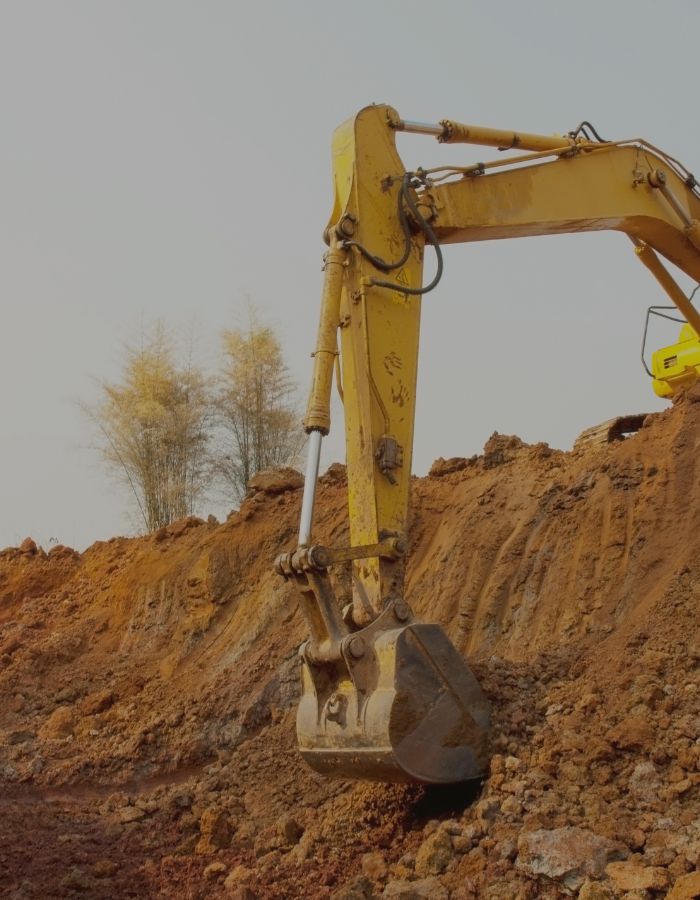
Our guide to new construction covers building on your own land, site work, and what drives the cost of a custom home.
Build a Home That Feels Like Yours.
Moving to Tennessee is about more than a new address. It’s about a place where your family can settle in for years to come.
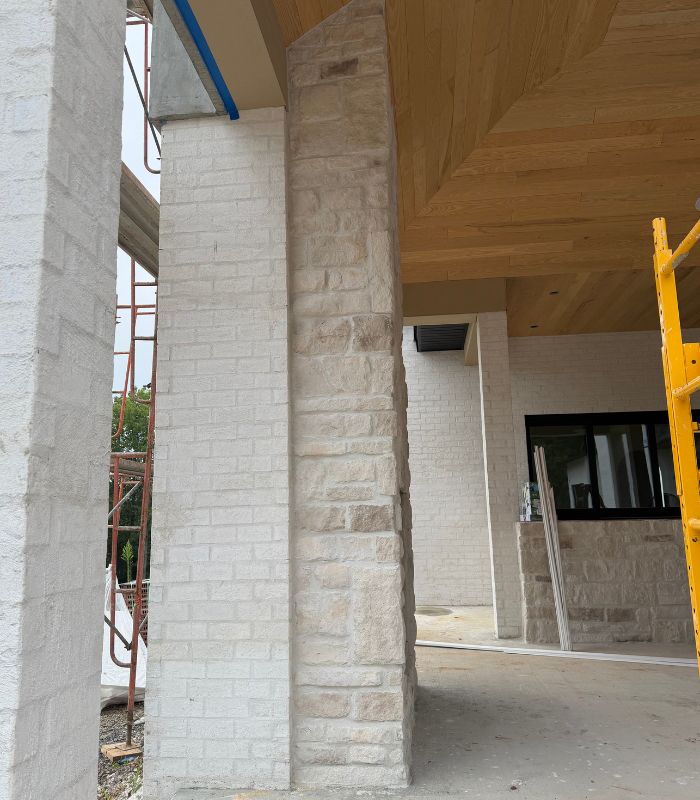
Maybe you’ve always wanted a wide front porch that looks out over the hills. Maybe it’s an open kitchen for family gatherings, a workshop, a walk-in pantry, or a single-story home built for comfortable retirement living. Every family brings a different list, and we build homes around the needs, the property, and the priorities you bring to the table.
Mike Dalton brings 35 years of project management and logistics to every build, and Rick Conley brings 32 years in construction. Between them, the details get managed, and you’re kept in the loop.
Moving From Out of State? Here’s Where to Start.
You don’t need every detail figured out before you reach out. Our process runs Discover → Plan → Build, and it works the same whether you live down the road or several states away.
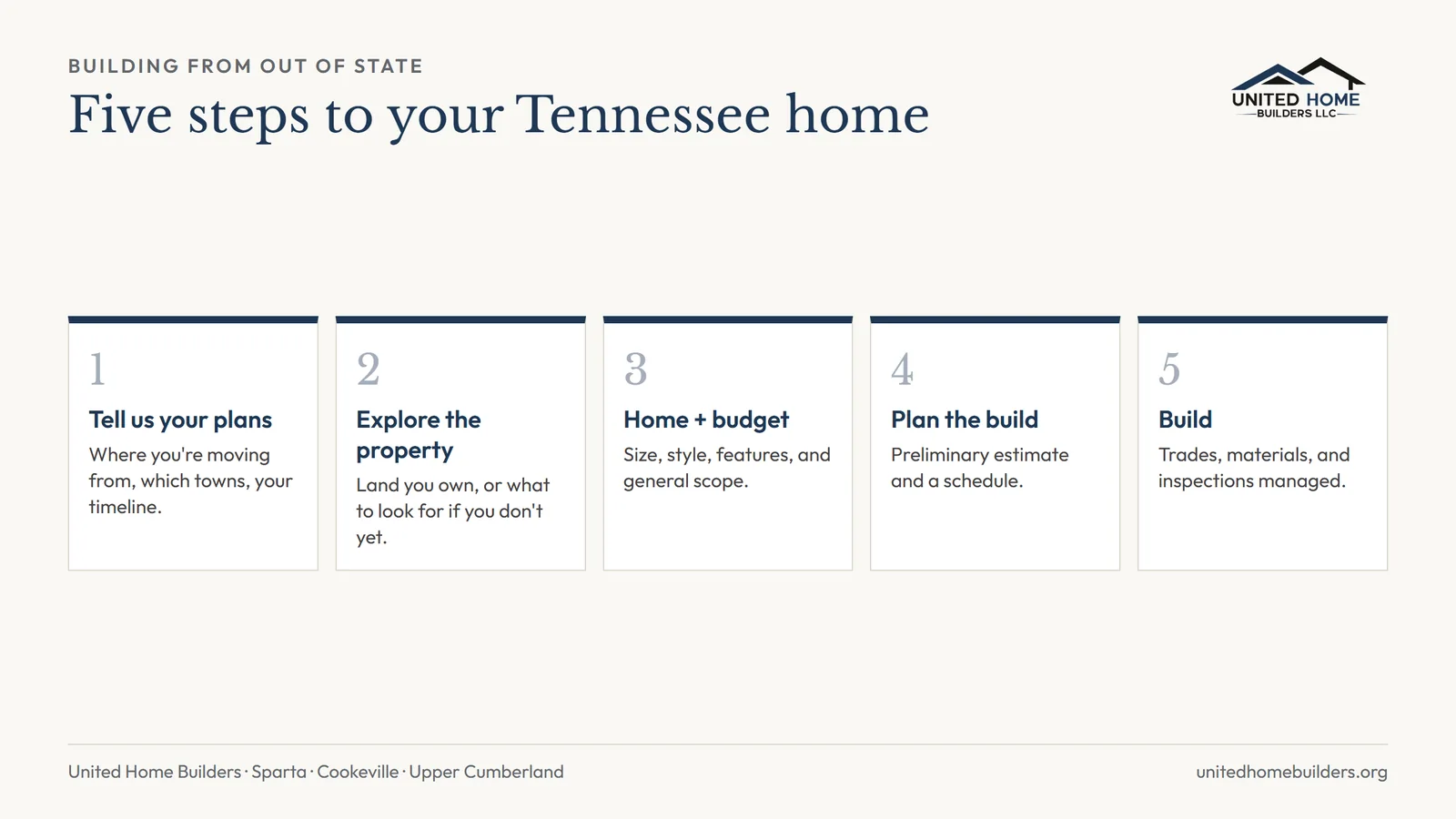
- Tell us about your plans. Where you’re moving from, which towns you’re considering, your timeline, and what you hope to build.
- Explore the property. If you own land, we’ll talk through it and your home plans. If you’re still looking, we’ll help you understand what to look for.
- Discuss the home and budget. Size, style, features, and the general scope, so you understand what’s involved.
- Plan the build. Once the property and project details are set, we move into planning, a preliminary estimate, and a schedule.
- Build your Tennessee home. With the plan in place, the trades, materials, inspections, and schedule get managed, and you’re kept informed.
Questions About Moving to Tennessee and Building a Home
Can I build a custom home in Tennessee if I live in another state right now?
Yes. Many families start planning their home before they move. You can begin by talking through your preferred location, your plans, and your timeline with a local builder.
Do I need to buy land before I contact United Home Builders?
No. Talking with a builder before you buy can help you spot construction challenges early and understand what kind of property you need.
How much does it cost to build a custom home in Tennessee?
It depends on square footage, design, materials, finishes, site conditions, utilities, and how much preparation the land needs. The best starting point is a conversation about your plans and your budget.
Is it cheaper to build a house or buy one in Tennessee?
It depends on the market, the property, and the home you want. Building gives you more control over the layout, materials, and features. Buying an existing home can mean a different timeline and cost.
What should I know before buying acreage in Tennessee?
Look past the acreage and the asking price. Check access, utilities, septic feasibility, terrain, restrictions, and how much of the land is actually buildable.
Do I need a septic permit to build in Tennessee?
If the property isn’t on public sewer, yes. Tennessee requires a permit to construct a septic system, and the state evaluates the site to determine what type of system it needs. Start that process before you commit to a building location.
What areas does United Home Builders serve?
We’re based in Sparta and build across Sparta, Cookeville, Crossville, Livingston, Monterey, Smithville, McMinnville, Gainesboro, and the surrounding area. Tell us where you’d like to build and we’ll confirm.
Can I start planning before I move to Tennessee?
Yes. A first conversation helps you figure out what information you’ll need, which decisions come first, and how to line up your move with your build.
What Are You Planning?
Whether you’re ready to build or still picturing what life in Tennessee could look like, we’d love to hear your plans. Tell us where you’re hoping to settle, what kind of home you’re imagining, and how far along you are.